
Plateaued at $1K MRR: Should You Keep Growing or Sell Your SaaS?
Plateaued at $1K MRR? Use a practical grow, hold, or sell framework to weigh energy, upside, support drag, opportunity cost, and buyer fit.
Direct Answer
Plateauing at $1K MRR is not a failure. It means the product has crossed from idea to asset, but it may not yet be worth more of your best energy. You should keep growing if you still have a believable channel, low support drag, and founder energy. You should hold if the SaaS produces calm cash flow with little effort. Selling is rational when the product is real, but the upside no longer justifies the attention it takes from your life or next project.
The decision is not only financial. It is an opportunity cost decision.
Who This Is For
Why Many SaaS Products Plateau Around $1K MRR
Many small SaaS products reach $1K MRR because the founder found a narrow pain and solved it well enough for early customers. The plateau often appears when the first channel stops working.
Common reasons:
- The founder sold through personal network and has no repeatable channel.
- Pricing is too low for the support required.
- The product solves a real but narrow problem.
- Churn offsets new customers.
- The founder's attention moved elsewhere.
- The next growth step requires a different skill than the first $1K did.
None of those means the product is bad. It means the business is asking for a new decision.
The Grow/Hold/Sell Framework
The useful question is not "how do I force this to $10K MRR?" It is "what is the best use of this asset and my energy from here?"
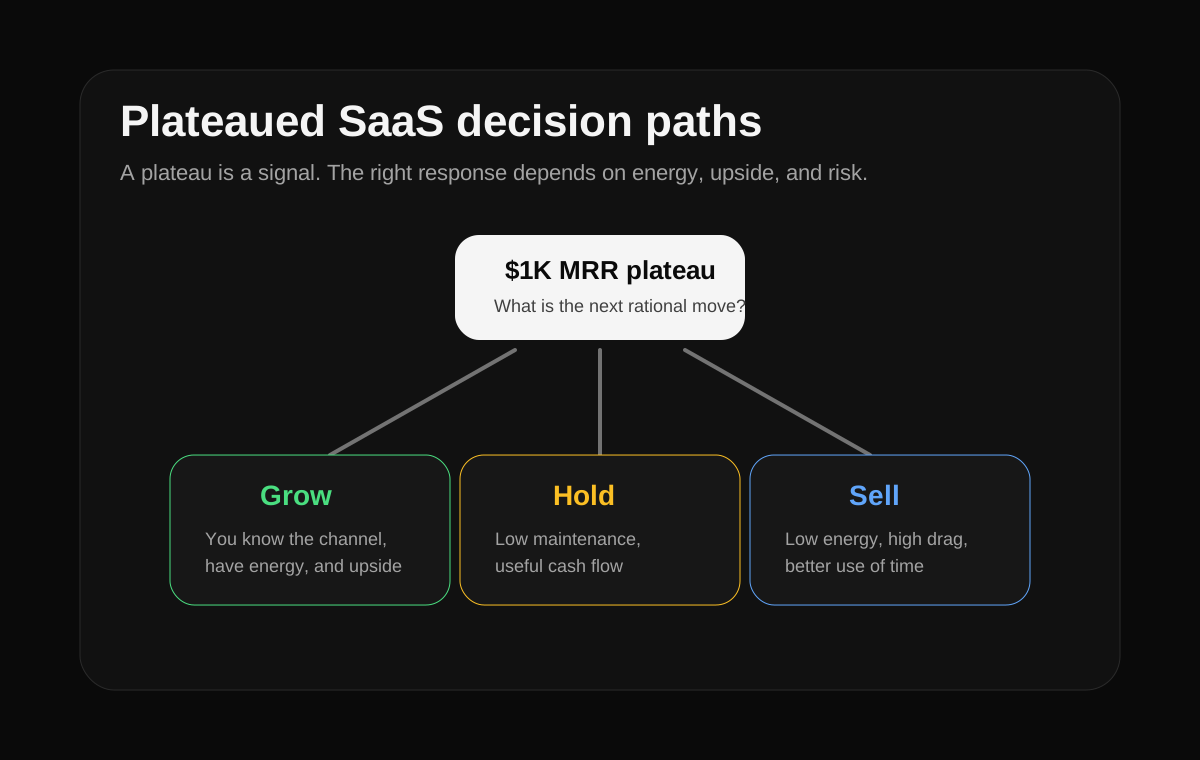
| Path | Best when | Risk |
|---|---|---|
| Grow | You know the next channel, support is manageable, and you still care. | You spend another year proving the same bottleneck. |
| Hold | The product is low maintenance and cash flow is useful. | Slow decay hides until customers churn. |
| Sell | Energy is low, handoff is possible, and the capital or attention has a better use. | You sell before fixing an obvious issue that a buyer would discount. |
When to Keep Growing
Keep growing when the problem is specific and solvable.
| Signal | What it suggests |
|---|---|
| Customers still ask for the product | Demand exists and the issue may be distribution, pricing, or positioning. |
| Support is light | More customers may not create much more work. |
| You know the next experiment | The growth path is not just hope. |
| Retention is solid | The base gives you time to improve acquisition. |
| You still have energy | Founder attention is still an asset, not a constraint. |
Hypothetical example: a $1,200 MRR compliance reminder tool has 40 customers, almost no support, and every churned customer leaves because they outgrow the simple plan. That may be a pricing and packaging problem, not a reason to sell.
When to Hold
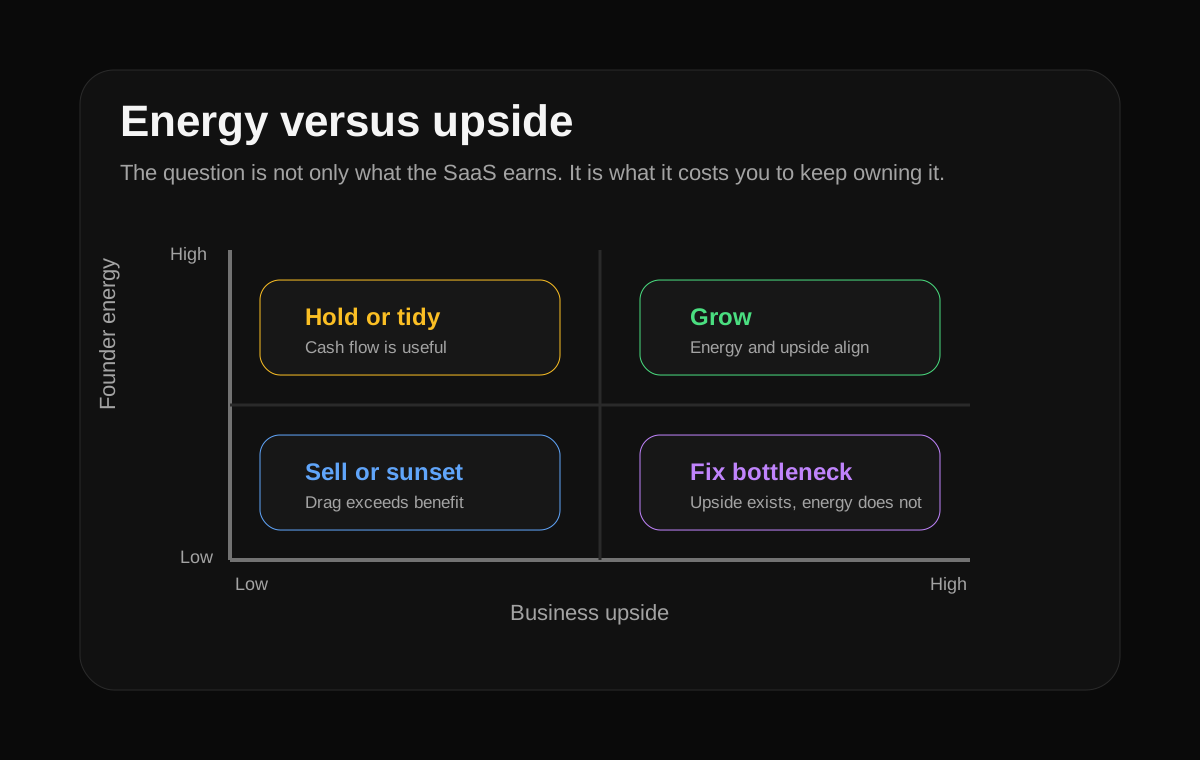
Holding is underrated. A SaaS doing $1K MRR with low support and low churn can be a calm asset. If it takes two hours a month, the rational move may be to keep it, clean up documentation, and let it run.
Holding is less rational when the product quietly drains attention. A tiny SaaS that interrupts weekends, creates guilt, and makes you avoid customer emails is not passive income. It is deferred stress.
When Selling Is Rational
Selling is rational when the SaaS is a real asset but no longer deserves your best hours.
| Signal | Why it matters |
|---|---|
| You avoid working on it | Low energy becomes product risk. |
| Support feels heavier than revenue | The buyer will price that, but another owner may still accept it. |
| You have a better opportunity | Opportunity cost is real even if the SaaS still earns money. |
| Growth requires a skill you do not want to build | The next owner may be better suited to the next chapter. |
| The product is transferable | A sale is more realistic if handoff is possible. |
If selling is on your mind, read how to sell a SaaS business around $1K MRR before you start contacting buyers.
The Buyer's View of a Plateaued SaaS
A plateau does not automatically scare a buyer. Hidden reasons for the plateau do.
The buyer will ask:
- Is churn offsetting acquisition?
- Is the market too small, or has the founder stopped trying?
- Are customers happy despite flat growth?
- Can the product be operated without the founder?
- Is there an obvious pricing, onboarding, or distribution fix?
If the plateau is caused by founder fatigue, the buyer may still see opportunity. If the plateau is caused by constant churn or fragile tech, the buyer will discount the business or walk away.
For the price side of that conversation, read what small SaaS valuation multiples really mean.
How to Prepare If You May Sell Later
Do not wait until you are completely burned out. The best time to make a SaaS sellable is before you emotionally need the sale.
Prepare by:
- Keeping clean monthly metrics.
- Recording common support issues.
- Documenting deploys and account access.
- Separating product work from personal habits.
- Writing a short roadmap that names real constraints.
- Fixing obvious transfer blockers.
- Best fit: SaaS doing roughly $500 to $5,000 MRR.
- Useful even if you are only curious about options.
- No customer contact or disclosure without permission.
What to Do Next
Use a one-page decision memo:
- Current MRR, profit, customers, churn, and support hours.
- What you tried to grow in the last six months.
- What you would try next if you had full energy.
- What else your time could be used for.
- What has to be true for you to keep owning it.
- What has to be true for you to sell it.
The answer may be grow, hold, or sell. The point is to make the decision directly instead of letting the plateau make it for you.
FAQ
Is plateauing at $1K MRR a failure?
No. A product that customers pay for has crossed an important line. The plateau simply means the next stage needs a different decision than the first stage.
Should I sell if I am burned out?
Burnout is a signal, but not the whole decision. First check whether the product is transferable, whether support is manageable, and whether a small cleanup period could improve your options.
Can a buyer grow what I could not?
Sometimes. A buyer may have more patience, a better channel, or a portfolio fit. They may also see the same limits you see. Be honest about what you tried.
What can make a plateaued SaaS hard to sell?
Hidden churn, high support, unclear metrics, fragile code, and founder-only knowledge. Those can make the buyer feel they are buying a problem instead of an asset.
What if I only want to sell later?
Prepare now. Clean metrics, documentation, and transferability help whether you sell in three months or keep the SaaS for years.