
What Is My SaaS Worth? Small SaaS Valuation Multiples Explained
Learn how buyers think about small SaaS valuation, revenue vs profit multiples, handoff risk, and realistic illustrative valuation bands before you sell.
Direct Answer
Small SaaS valuation starts with recurring revenue and profit, then gets adjusted for risk. MRR, ARR, revenue, and profit are not the same thing: $1,000 MRR is roughly $12,000 ARR, but the buyer still wants to know how much cash is left after hosting, tools, payment fees, contractors, and support. A tiny SaaS can be valuable, but the likely valuation band can move a lot based on churn, support load, customer concentration, code transfer, and founder dependence.
No single multiple answers the question. At this size, a buyer is asking: would I rather own this asset, fix it, and operate it, or put the same time and money somewhere else?
Who This Is For
The Basic Valuation Math
The basic terms matter because founders often mix them together.
- MRR is monthly recurring revenue.
- ARR is annual recurring revenue, often estimated as MRR multiplied by 12.
- Revenue is total money received in a period. It may include recurring and non-recurring items.
- Profit is what remains after real operating costs.
A $1,000 MRR SaaS might look like $12,000 ARR. But if it costs $350 per month in hosting, tools, contractor help, and support credits, the buyer sees a different asset than a SaaS with the same MRR and $80 of monthly costs.
Revenue Multiples vs Profit Multiples
Revenue multiples use revenue as the base. Profit multiples use profit as the base. Neither is automatically right for every small SaaS.
Revenue can matter when the product is sticky, recurring, and has believable upside. Profit can matter more when growth is flat and the business is mainly being bought as a small cash-flowing software asset.
At this size, a buyer may look at both, then adjust down or up based on how likely the revenue is to survive after the founder leaves.
Public and larger private SaaS benchmark reports, such as the SaaS Capital private SaaS valuation research, can be useful background. They should not be copied directly onto a $1K MRR micro-SaaS. Scale, reporting quality, buyer pool, and handoff risk are completely different.
Why Small SaaS Valuations Are More Fragile
Tiny SaaS valuations are fragile because one surprise can change the whole buyer view.
If one customer is 35% of MRR, losing that customer changes the asset. If the founder answers support every morning, the buyer is buying a job. If deploys are undocumented, the buyer may have to budget for technical rescue before growth.
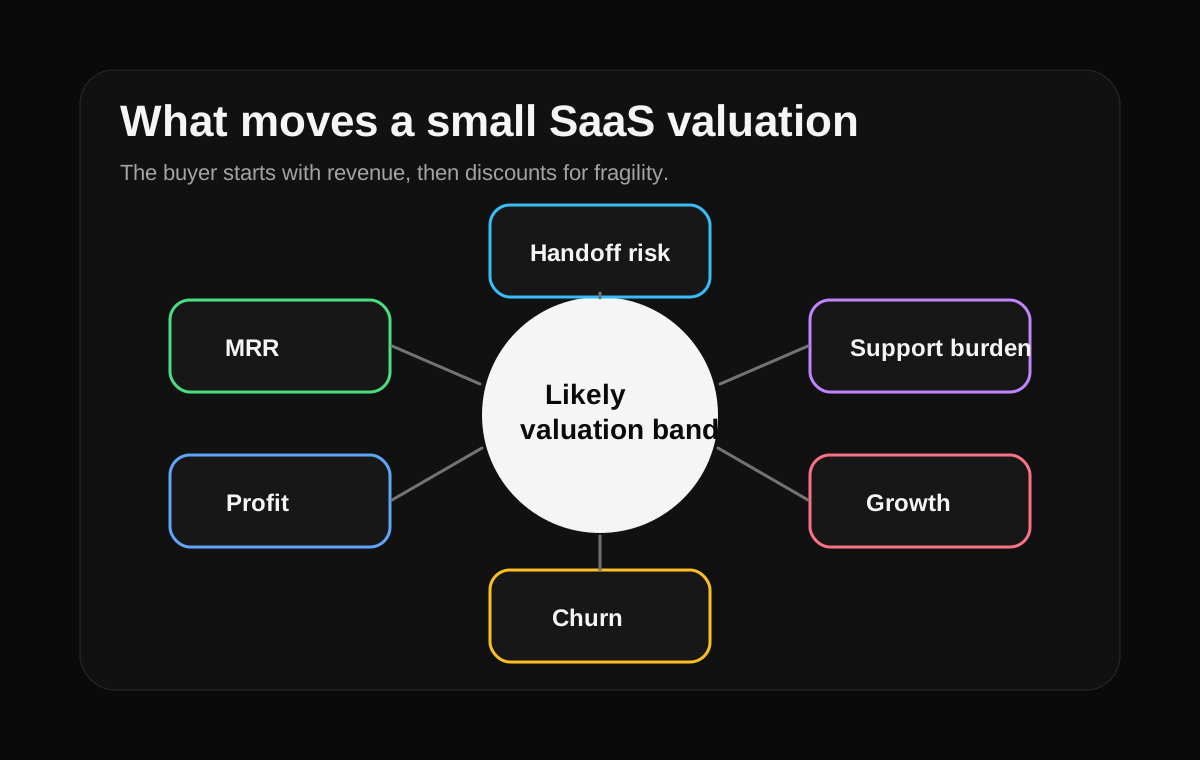
The buyer's lens is not only "what multiple should this get?" It is "what could break, and do I have the time to own that risk?"
The Risk Factors Buyers Discount For
| Driver | Can increase value when | Can decrease value when |
|---|---|---|
| MRR quality | Recurring charges are visible, stable, and tied to named customers. | Revenue includes one-off setup, manual services, or unclear adjustments. |
| Profit | Costs are low and easy to explain. | Profit disappears after realistic support or contractor costs. |
| Churn | Cancellations are low and explainable. | New signups hide a leaking base. |
| Growth | There is a repeatable channel or obvious pricing gap. | Growth came from a one-time launch that cannot be repeated. |
| Support burden | The product has few tickets and good docs. | The founder is the help desk. |
| Handoff risk | Accounts, code, deploys, and customer context can transfer cleanly. | The business depends on personal accounts or unwritten founder knowledge. |
If your SaaS makes $1,000 MRR but needs 15 support hours per week, that is a different asset than a $1,000 MRR SaaS with two tickets a month.
Illustrative Valuation Scenarios
The following examples are illustrative only. They are not market rules, guaranteed offers, or universal multiples. They show how a buyer might think about risk, not what every SaaS will sell for.
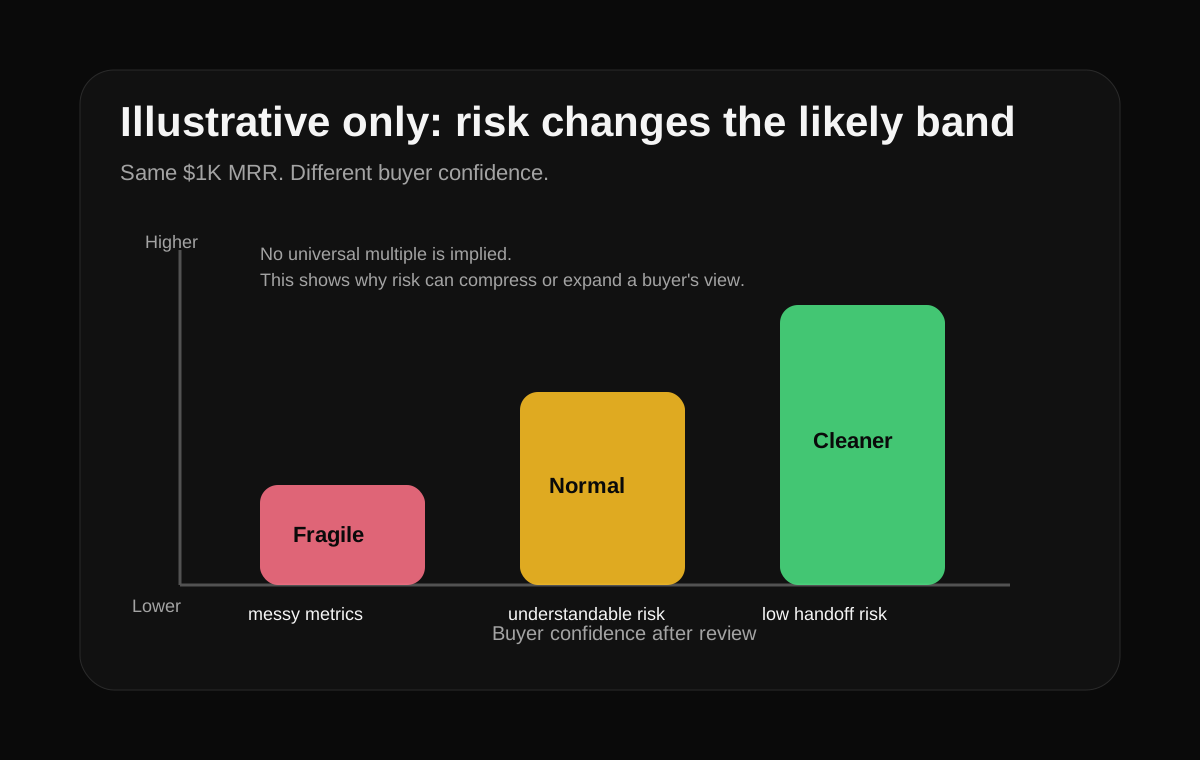
| Hypothetical scenario | Buyer interpretation | Illustrative valuation conversation |
|---|---|---|
| $750 MRR, flat, light support, clean transfer | Small but understandable. Low drama may matter more than growth. | Likely discussed as a modest asset value tied to ARR, profit, and handoff simplicity. |
| $1,000 MRR, $700 monthly profit, stable customers | Useful recurring software with cash flow and manageable risk. | Buyer may model revenue and profit cases, then choose a band based on churn and support. |
| $1,400 MRR, one customer is half of revenue | Headline MRR is fragile. | Customer concentration may pull the band down unless the relationship is unusually durable. |
| $3,500 MRR, growing, documented, low support | More buyers can justify attention because upside and handoff are clearer. | A wider buyer pool may support a stronger band, but diligence still decides. |
If you are trying to decide whether the SaaS is sellable before worrying about price, start with how to sell a SaaS business around $1K MRR.
How to Increase Your Valuation Before Selling
The best valuation work reduces buyer uncertainty.
Do this before asking for a number:
- Reconcile MRR to billing data.
- Separate recurring revenue from one-off revenue.
- Calculate monthly profit after real expenses.
- Write down support volume and common issues.
- Export customer start dates, plan, and current MRR.
- Document the codebase, deployment, infrastructure, and account transfer steps.
- Explain churn honestly.
The seller due diligence checklist is useful because it shows what buyers will ask for after the first valuation conversation.
- Best fit: SaaS doing roughly $500 to $5,000 MRR.
- Useful even if you are only curious about options.
- No customer contact or disclosure without permission.
What to Do Next
Build a simple valuation packet before you ask any buyer for a number:
- Current MRR and ARR.
- Last 12 months of revenue by month.
- Monthly profit after real costs.
- Customer count and concentration.
- Churn notes and cancellations.
- Support hours per week.
- Technical handoff notes.
Then ask for a range, not a single magic price. The first answer should help you decide whether to sell now, improve first, or keep holding.
FAQ
What multiple is my small SaaS worth?
There is no universal multiple for a tiny SaaS. Buyers will look at ARR, profit, churn, support burden, growth, concentration, and handoff risk. A clean product may support a stronger band than a messy product with the same MRR.
Is MRR or profit more important?
Both matter. MRR shows recurring demand. Profit shows what remains after operating the product. At small scale, profit and support burden often get more attention than founders expect.
Should I use public SaaS multiples?
Use them as background only. Public-company and larger private SaaS multiples usually assume scale, reporting, team depth, and buyer pools that a $1K MRR SaaS does not have.
Can a buyer value my SaaS if growth is flat?
Yes, if customers stay, support is light, and the product can transfer cleanly. Flat growth reduces upside, but it does not automatically erase value.
What can kill the valuation conversation?
Unclear revenue, hidden churn, heavy support, customer concentration, personal-account dependencies, and an owner who cannot explain how the product runs.