
Where to Sell Your SaaS Business: Marketplace, Broker, or Direct Buyer?
Compare SaaS marketplaces, brokers, direct buyers, and strategic acquirers so you can choose the right sale path for a small SaaS without wasting time.
Direct Answer
A small SaaS can be sold through a marketplace, broker, direct buyer, or strategic acquirer. For a SaaS around $1K MRR, the best path is often a direct buyer or a carefully chosen marketplace, because the deal may be too small for many broker-led processes and too early for most strategic acquirers. The right choice depends on size, urgency, cleanliness, confidentiality, and how much buyer filtering you want to do yourself.
If your SaaS is tiny but clean, a direct buyer can save time. If you want a broader buyer pool and can handle noise, a marketplace can make sense.
Who This Is For
The Main Ways to Sell a SaaS
There are four common paths:
- Marketplace: list the SaaS where buyers browse.
- Broker: hire someone to package and run the process.
- Direct buyer: talk privately with a buyer who already wants small SaaS assets.
- Strategic acquirer: sell to a company that wants the product, customers, or capability.
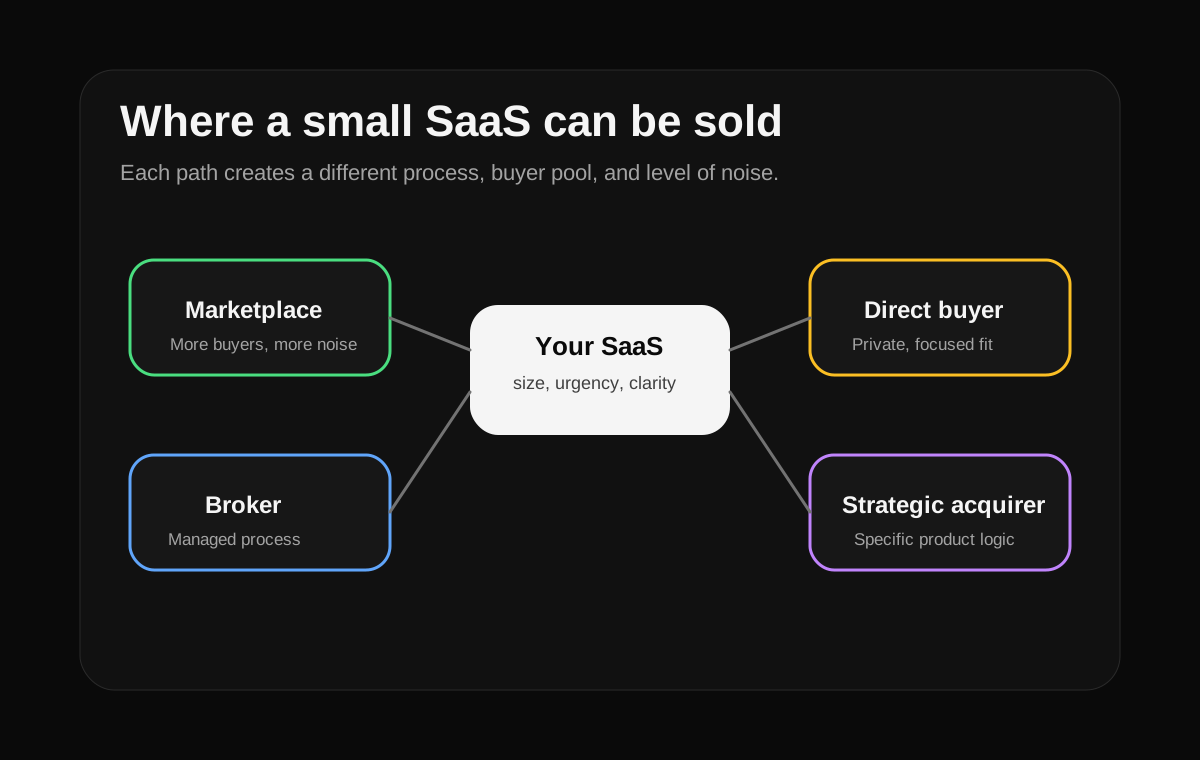
| Route | Good fit when | Main tradeoff |
|---|---|---|
| Marketplace | You want buyer exposure and can handle inbound questions. | More noise and more buyer filtering. |
| Broker | The SaaS is large or clean enough to justify a managed process. | May be too heavy for a very small SaaS. |
| Direct buyer | You value privacy, speed, and a focused fit conversation. | You may see fewer competing offers. |
| Strategic acquirer | A specific company has a clear reason to want your product or customers. | Harder to find and often slower to navigate. |
Marketplace Route
Marketplaces can be useful when you want exposure. Official SaaS category pages such as Acquire.com SaaS companies for sale and Flippa SaaS businesses show the kind of public marketplace environment founders often consider.
The marketplace route can work when:
- Your metrics are clean.
- You can answer repetitive buyer questions.
- You are comfortable sharing enough detail to attract interest.
- You can filter serious buyers from casual browsers.
What can kill this route is weak preparation. A vague listing, unclear financials, and slow replies can attract noise without creating trust.
Broker Route
A broker can help package the business, manage buyer communication, and create a more structured process. That can be valuable for larger, cleaner SaaS companies or founders who want help managing a sale.
For a SaaS around $1K MRR, the broker route may be less natural. The deal may be too small for many advisors to prioritize, and the process cost can outweigh the benefit. That is not a rule. It is a practical concern.
If you do talk to a broker, ask what size deals they handle, how they qualify buyers, what materials they need, and whether your SaaS is honestly a fit for their process.
Direct Buyer Route
A direct buyer route is a private conversation with someone who already buys or evaluates small SaaS businesses. This can fit tiny SaaS well because the process can be practical: basic metrics, buyer review, diligence, handoff, close.
The buyer's lens here is fit and transferability. A direct buyer wants to know whether they can own the product without inheriting hidden chaos.
Direct can work well when:
- You value privacy.
- You want a faster yes, no, or not yet.
- The business is small enough that a public process feels excessive.
- You want feedback before cleaning up everything.
The tradeoff is that you may not create a broad auction. If maximizing every possible dollar is the only goal, a single direct conversation may not be enough.
Strategic Acquirer Route
A strategic acquirer buys because your SaaS solves a specific problem for their company. They may want the product, customer base, workflow, data, or a feature they would rather buy than build.
Strategic interest is attractive when it is real. It is also easy to overestimate. Many companies will take a call. Fewer will prioritize a tiny acquisition.
A strategic route may fit if:
- Your SaaS serves the same niche as a larger product.
- Customers clearly overlap.
- The product fills a gap in their roadmap.
- Integration would be realistic.
It may be a poor fit if you need speed or if the acquirer has no existing acquisition habit.
Best Path by MRR Size
| MRR range | Often worth considering | Why |
|---|---|---|
| $500 to $1,000 | Direct buyer or prepare first | The asset may be sellable, but buyer effort must stay low. |
| $1,000 to $2,500 | Direct buyer or marketplace | There may be enough revenue for buyer interest if risk is clear. |
| $2,500 to $5,000 | Marketplace, direct buyer, selective broker | More buyers can justify review time if metrics and handoff are clean. |
| Above $5,000 | Broker, marketplace, direct, strategic | The buyer pool may widen, but diligence expectations rise too. |
For valuation context, read what small SaaS valuation multiples actually mean.
Best Path by Founder Goal
| Founder goal | Likely path | Reason |
|---|---|---|
| Quiet, low-drama review | Direct buyer | A focused conversation avoids a public listing. |
| Maximum buyer exposure | Marketplace | More potential buyers can see the listing. |
| Help managing process | Broker | Useful when the deal size supports advisor time. |
| Product fit with one company | Strategic acquirer | Best when there is a clear reason that buyer should care. |
| Unsure whether to sell | Direct buyer or prepare first | You need feedback before creating a process. |
How to Avoid Wasting Time With the Wrong Path
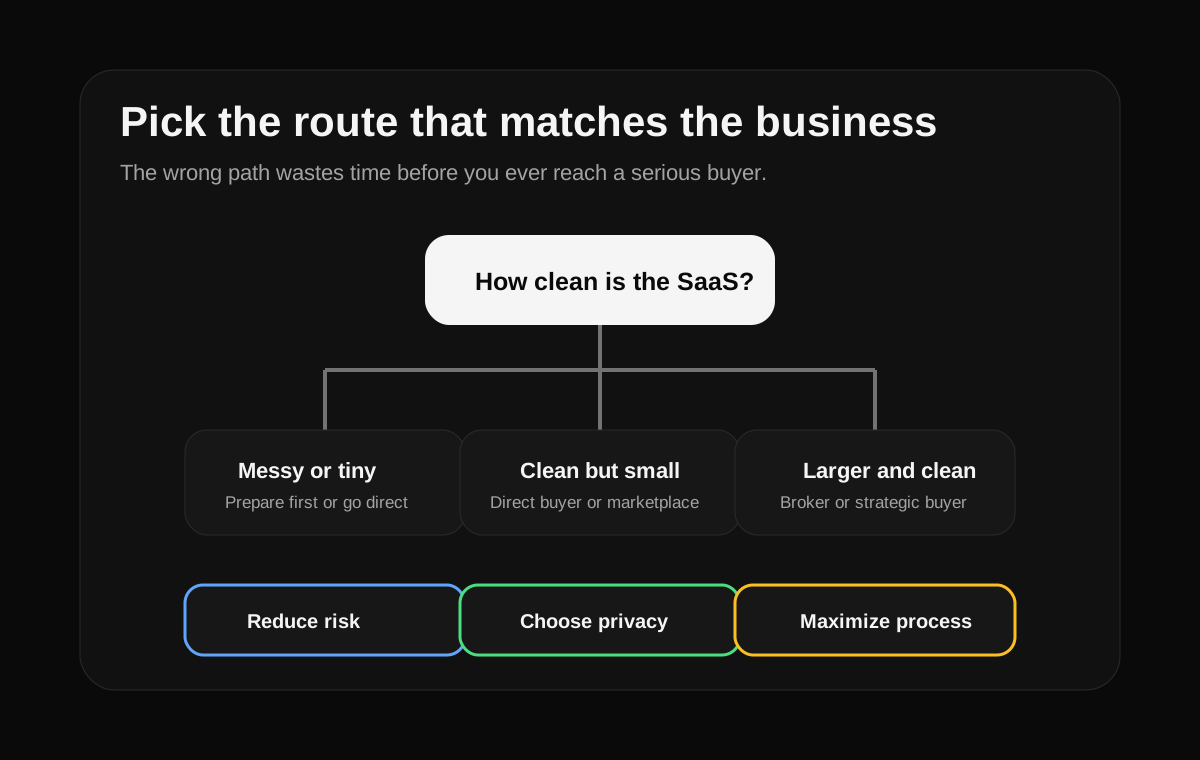
Before choosing a route, answer these questions:
- Is the SaaS clean enough for a stranger to review?
- How public do you want the process to be?
- Do you need speed, feedback, or maximum exposure?
- Would a buyer understand the business in one call?
- Do you have the diligence materials ready?
If the basics are not ready, use the SaaS due diligence checklist for sellers before listing anywhere.
If you are around $1K MRR and wondering whether a direct sale is realistic, read how to sell a SaaS business when you are around $1K MRR.
- Best fit: SaaS doing roughly $500 to $5,000 MRR.
- Useful even if you are only curious about options.
- No customer contact or disclosure without permission.
What to Do Next
Use a simple route filter:
- If you want privacy and practical feedback, start with a direct buyer.
- If you want exposure and can handle buyer filtering, consider a marketplace.
- If the SaaS is larger, clean, and worth a managed process, talk to brokers.
- If one company has obvious product logic, test strategic interest carefully.
- If your metrics are messy, prepare first.
The wrong path burns energy. The right path makes the next conversation clearer.
FAQ
What is best for a SaaS around $1K MRR?
Often a direct buyer or carefully prepared marketplace listing. Many broker and strategic processes are heavier than a $1K MRR SaaS can justify, unless there is something unusually attractive about the asset.
Should I list publicly right away?
Not if your metrics, support, or handoff are unclear. A public listing can create questions before you are ready to answer them.
Is a broker worth it for a small SaaS?
Sometimes, but deal size matters. Ask whether the broker regularly handles businesses at your size and whether their process fits your goals.
Can I talk to direct buyers before deciding to sell?
Yes. A private review can help you decide whether to sell now, improve first, or hold.
What can kill a sale path?
Wrong buyer fit, unclear numbers, slow responses, over-optimistic valuation expectations, and hidden handoff risk. The best route still needs clean basics.